Written by MrHamza, Credit & Debt Basics Educator
In this article we will Explaining The Balance Transfer Credit Cards. If you’ve got credit card debt and you’re tired of watching interest pile up, you’ve probably seen offers like:
- “0% APR on balance transfers for 18 months!”
- “Transfer your balance and save hundreds!”
- “Consolidate your debt onto one low-rate card!”
It sounds awesome… and sometimes it really is. But balance transfer credit cards also come with fees, rules, and traps that can bite you if you don’t know how they work.
This guide breaks down, in plain English:
- What a balance transfer credit card is
- How it actually works behind the scenes
- The real pros (less interest, faster payoff)
- The real cons (fees, deadlines, temptation)
- How to tell if a balance transfer is a smart move for you
1. What Is a Balance Transfer Credit Card?
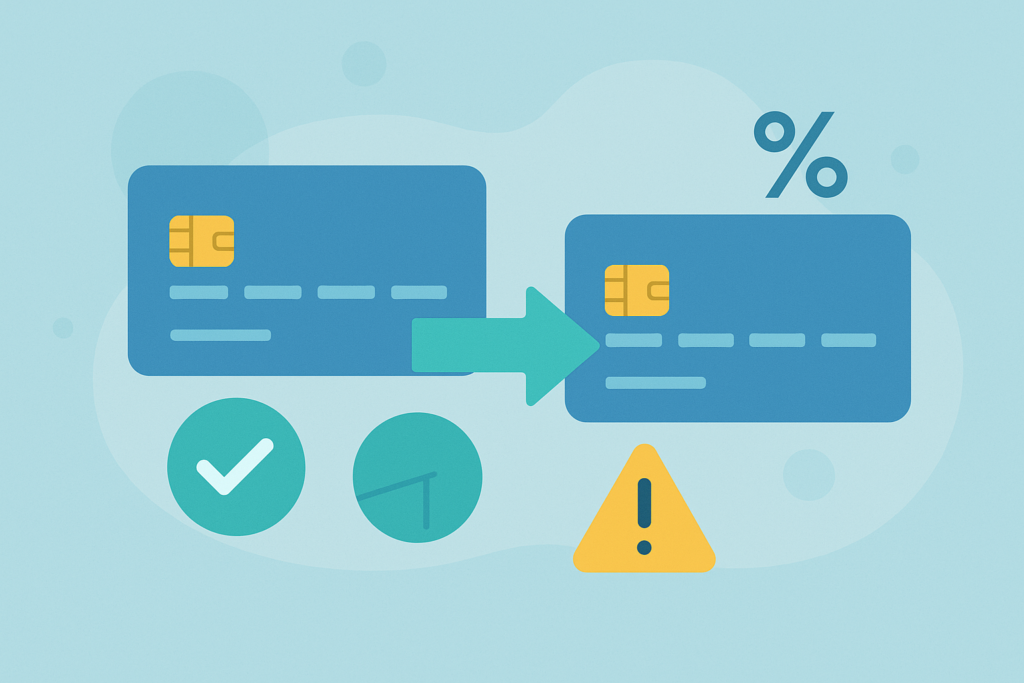
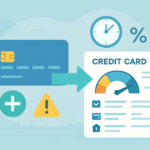
A balance transfer lets you move existing credit card debt from one card to another, often to get a lower interest rate (sometimes 0% for a limited time).
Here’s what’s typically happening:
- You already owe money on Card A (maybe at 22–29% APR).
- You apply for Card B, which offers a 0% or low intro APR on balance transfers.
- Card B pays off all or part of your balance on Card A.
- Now you owe the money on Card B instead, ideally at 0% interest for X months.
Most offers:
- Charge a balance transfer fee (often around 3–5% of the amount transferred).
- Give a promotional 0% or low APR for a limited time (commonly 6–18 months, sometimes more).
- Then jump to a much higher regular APR on any remaining balance after the promo ends.
So a balance transfer card is basically a card that says:
“Move your old debt here. We’ll give you a break on interest for a while. But read the fine print.”
2. How a Balance Transfer Actually Works (Step-by-Step)
Let’s say you have:
- $5,000 on a credit card at 24% APR
- You’re only making minimum-ish payments
- You get an offer: 0% APR on balance transfers for 18 months, 3% transfer fee
Here’s the basic flow:
- You apply for the new balance transfer card (Card B).
- When approved, you request a balance transfer from Card A to Card B.
- Card B sends money to Card A and pays off that $5,000 (it can take a few days).
- Your old card (Card A) balance drops to $0 (or lower, if only part transferred).
- Your new card (Card B) now shows:
- Balance: $5,000
- Transfer fee: $150 (3% of $5,000)
- Total starting balance: $5,150 at 0% APR for 18 months
From that moment, your job is simple on paper (but hard in real life):
Pay off as much of that $5,150 as you can before the promotional 0% period ends.
If you don’t, the remaining balance starts getting charged at the regular APR, which might be 20–30%+.
3. How Much Can a Balance Transfer Actually Save? (Real Example)

Let’s reuse the example:
- Old card: $5,000 at 24% APR
- New card: 0% APR for 18 months, 3% transfer fee ($150)
Very rough comparison (just to see the scale, not penny-perfect math):
If you do nothing and stay at 24% APR
A simple interest rough idea over 18 months:
- Interest ≈ $5,000 × 24% × (18/12)
- = $5,000 × 0.24 × 1.5
- = $1,800 in interest (rough illustration if your balance stays high)
If you move to 0% APR with a 3% fee
- Transfer fee: $5,000 × 3% = $150
- Interest during 0% intro: $0 (if you pay on time and don’t lose the promo)
So compared to doing nothing, you might be looking at:
- About $1,800 in interest vs $150 in fees
That’s a huge difference.
In reality, how much you save depends on:
- How fast you’re paying your balance down
- Whether you keep using the cards
- Whether the new promo is truly 0% and how long it lasts
- Whether you avoid late payments (which can kill the intro rate)
But used correctly, a balance transfer can easily save hundreds or even thousands of dollars in interest.
4. Pros of Balance Transfer Credit Cards
Let’s go through the real benefits, not just the marketing promises.
4.1. You Can Pay Less Interest (Sometimes a Lot Less)
The main win: you move high-interest debt (often 20%+) onto a card with 0% or very low APR for a while.
Consumer explanations and comparison tools often show that 0% balance transfer offers, when used correctly, can significantly cut interest costs and help people pay off debt faster.
If you were going to take a couple of years to pay off that debt anyway, but you can do most of the payoff during a 0% window, you may dramatically reduce the amount of interest you ever pay.
4.2. You Can Get Out of Debt Faster (If You Treat It Like a Plan)
With 0% interest, more of each payment goes to principal instead of interest.
If you set a fixed monthly payment and stick with it, you can often:
- Pay down the balance faster
- Finish the debt during the promo period
- Avoid rolling high-interest debt from year to year
Some comparison sites find people saving hundreds on average by switching to balance transfer cards when they actually pay the debt down aggressively during the intro.
4.3. You Can Simplify Multiple Debts into One Payment
If you have:
- 3 cards with balances
- 3 different due dates
- 3 different interest rates
You can sometimes move them to one balance transfer card and have:
- 1 interest rate (0% during promo)
- 1 due date
- 1 monthly payment to focus on
This simplification alone can make it easier to stay organized and stick to a payoff plan.
4.4. You Might Get a Temporary Mental Reset
Money is emotional. When you feel like your debt is out of control, being able to move it, see a 0% APR, and have a clear timeline (“18 months to kill this”) can be motivating.
Used wisely, a balance transfer can feel like:
“Okay, I’ve paused the interest bleed. Now I have a window to fix this.”
5. Cons of Balance Transfer Credit Cards (The Fine Print Traps)
Now the part card companies don’t put in big bold letters.
5.1. Balance Transfer Fees Eat Into Your Savings
Most balance transfer cards charge a fee just to move the debt, usually a percentage of the amount transferred.
The CFPB defines a balance transfer fee as a charge to move your outstanding balance to a different card, and notes that companies can charge this fee even when the promotional rate is 0%.
Typical:
- Around 3–5% of the transferred amount in many markets; some offers have lower fees, some have none.
Example:
- Transfer $5,000 with a 4% fee → $200 cost up front.
If your existing interest costs wouldn’t be that high anyway (because you’re paying the debt off very quickly), the fee might not be worth it.
5.2. The 0% APR Is Temporary (and the Regular APR Can Be High)
The low or 0% APR usually applies for a limited time:
- Many offers in the wild are in the 6–18 month range, sometimes longer.
- Legally, introductory rates must last at least 6 months, unless you’re more than 60 days late.
After the promo period ends:
- Any remaining balance jumps to the regular APR (often 20–30%+).
- If you didn’t pay much during the promo, you could be right back where you started—or worse.
So a balance transfer without a payoff plan can become a time bomb.
5.3. One Late Payment Can Kill the Deal
Many offers say something like:
- “0% introductory APR for 18 months if you pay on time.”
If you’re 60+ days late on a payment, the issuer may:
- End your promotional rate early
- Hit you with a penalty APR (even higher than the regular APR)
- Report a late payment to the credit bureaus, hurting your credit score
So if you’re already struggling to manage due dates, a balance transfer card requires extra discipline and reminders.
5.4. It Can Hurt (or Help) Your Credit Score
A balance transfer card isn’t automatically good or bad for your credit score—it depends how you use it.
Possible negatives:
- Hard inquiry from applying for a new card
- New account can temporarily lower your average age of credit
- If you immediately use up most of your new card’s limit, your utilization could still be high
Possible positives:
- If the new card increases your total available credit, your overall utilization may drop (if you’re not maxing everything)
- If you stop using the old card and consistently pay down the new one, your utilization and payment history can improve over time
The key: Don’t see a new card as “more spending room” — it’s a tool to attack debt.
5.5. Temptation to Keep Spending
Maybe the biggest “silent con”:
- You move $5,000 to a new 0% card
- Your old card now shows a $0 balance
- It feels like you have $5,000 of “free space” again
So you start using the old card, slowly rebuilding a new balance while still owing the transferred balance on the new card.
That’s how people end up with two maxed-out cards instead of one.
A balance transfer only helps if you stop using the old card (or use it very lightly and pay in full) while you pay down the transferred balance.
6. When Does a Balance Transfer Make Sense? (And When Not?)
Good Situations for a Balance Transfer
It can be a smart move when:
- You have a high-interest balance (20%+ APR)
- You’re confident you can be approved for a good offer
- You can afford steady payments and have a plan to pay off the balance during the promo period
- You’re disciplined enough not to rack up new debt on the old card
- The fee is clearly lower than the interest you’d otherwise pay
You’re essentially using the system to:
Freeze interest for a while and aggressively kill the debt.
Risky Situations for a Balance Transfer
It might not be a great idea when:
- You’re barely making minimum payments and can’t commit to a payoff plan
- You’re very disorganized with due dates and often pay late
- You’re tempted to see the new card as “extra money” to spend
- The balance transfer fee is high, and you’d clear the debt quickly anyway
- You’re close to maxing out your total available credit
In those cases, it might be better to:
- Talk to a nonprofit credit counselor
- Arrange a debt management plan
- Work on budgeting and income before playing the balance transfer game
7. How to Use a Balance Transfer Card the Smart Way
If you decide a balance transfer might be right for you, here’s a simple strategy:
- Do the math first
- Estimate the interest you’ll pay if you do nothing
- Compare it with the transfer fee + any interest after promo if you can’t fully pay it off
- Pick the right card
- Look for:
- Long enough 0% promo period
- Reasonable transfer fee
- No gotcha terms (like very short windows to make the transfer)
- Use reputable comparison tools and guides (CFPB’s credit card resources are a good neutral starting point).
- Look for:
- Create a payoff plan before you apply
- Take the total you’ll owe after the fee
- Divide by the number of promo months
- That’s your target monthly payment
- Transfer the balance, then freeze your old card behavior
- Consider putting the old card away physically
- Only keep it open if it helps your credit utilization and you trust yourself not to binge spend
- Set up automatic payments
- At least the minimum
- Ideally your full planned monthly amount
- Add reminders a few days before the due date to verify everything processed
- Track the promo end date
- Put it in your calendar with a big warning:
- “0% BALANCE TRANSFER ENDS THIS MONTH”
- Aim to have little or no balance left by that date
- Put it in your calendar with a big warning:
8. Quick FAQ: Balance Transfer Credit Cards
Q1: Will a balance transfer hurt my credit score?
Applying for a new card can cause a small temporary dip due to the hard inquiry and new account. But if you lower your utilization and pay on time, it can help over the long term. How it affects you depends on your overall credit picture and behavior.
Q2: Can I transfer balances between cards from the same bank?
Usually no. Most issuers don’t allow balance transfers between their own products (e.g., from one Chase card to another Chase card). You typically need a card from a different issuer.
Q3: Do I have to transfer the whole balance?
No. You can usually transfer part of a balance, up to the new card’s approved limit. Just remember the fee is based on the amount you transfer.
Q4: What happens if I don’t pay off the balance before the promo ends?
Any remaining balance starts accruing interest at the card’s regular APR (which may be pretty high). For some store or special financing plans, deferred interest offers can even charge retroactive interest, but standard balance transfer cards usually don’t do that—still, always read the terms.
Q5: Can a balance transfer card solve all my debt problems?
No. It’s a tool, not a cure. If overspending and lack of a budget are the real issues, moving balances around won’t fix the root problem. It only works if you change the behavior behind the debt and follow a payoff plan.
Final Thoughts
Balance transfer credit cards can be powerful:
- They can slash your interest for a limited time
- They can speed up your payoff timeline
- They can simplify your debt
But they’re not magic. They come with fees, deadlines, and the risk of ending up deeper in debt if you keep swiping.
If you see a balance transfer as:
“My chance to pause interest and attack this debt hard,”
and you build a real plan around it, it can absolutely be a smart move.
If you see it as:
“Free money and more room to spend,”
it will almost always backfire.