Written by MrHamza, Credit Score Educator for Beginners
Soft Inquiry vs Hard Inquiry: You finally decide to check your credit and you see a section called “Inquiries” with weird labels like:
- “Soft inquiry”
- “Hard inquiry”
- “Account review”
- “Promotional”
And you’re thinking:
“Okay… which of these are bad? Is all of this hurting my score?”
Good news: not all credit checks are created equal.
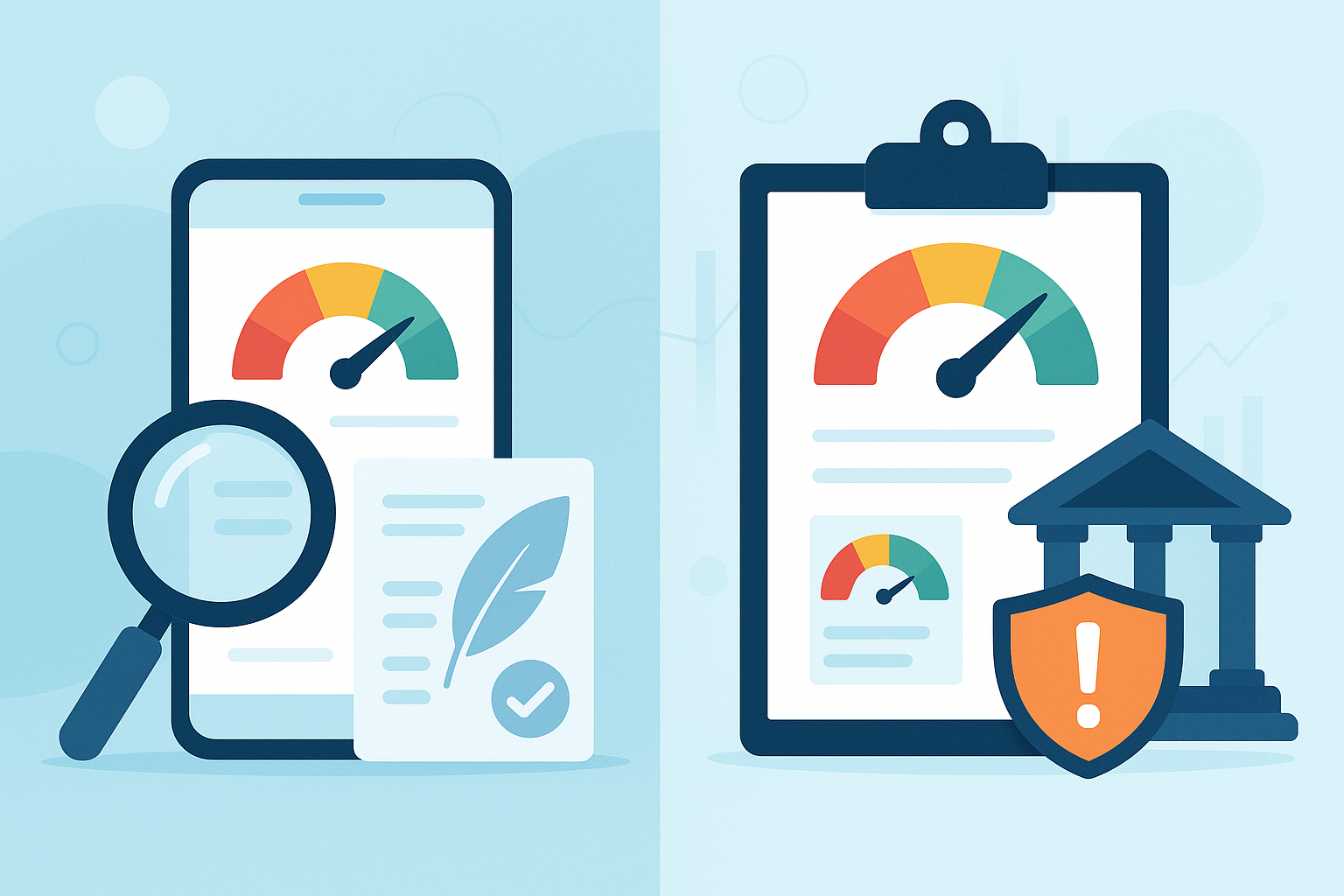
Some are harmless (soft inquiries), and some can temporarily lower your score (hard inquiries).
In this guide, we’ll break down:
- What a soft inquiry is
- What a hard inquiry is
- Real-life examples of each
- How much they actually affect your score
- How long they stay on your reports
- How to apply for credit without trashing your score
All in simple, beginner-friendly language.
1. What Is a Credit Inquiry? (Soft Inquiry vs Hard Inquiry)
Let’s start at the top.
A credit inquiry is a record that someone looked at your credit report.
Every time you or a company pulls your credit file from a bureau, an inquiry is created. Financial Education+1
There are two main types:
- Soft inquiries (also called soft pulls or soft checks)
- Hard inquiries (also called hard pulls or hard credit checks)
The big difference:
- Soft inquiries → do not affect your credit score
- Hard inquiries → can temporarily lower your credit score a bit
Official sources like the CFPB, myFICO, Experian, and Equifax all say the same thing: soft checks don’t impact scores, hard checks might. Equifax+3Consumer Financial Protection Bureau+3myFICO+3
2. What Is a Soft Inquiry?
Soft inquiry = a credit check that doesn’t affect your credit scores.
Soft inquiries happen when your credit is checked for informational or promotional reasons, not because you’re actively applying for new credit.
According to Experian and the CFPB: Experian+2Consumer Financial Protection Bureau+2
- Soft inquiries do not affect your credit scores
- They are usually only visible to you when you look at your own report
- Lenders generally can’t see other soft inquiries when they pull your report
Common Examples of Soft Inquiries
Soft inquiries include things like:
- You checking your own credit report or score
- Through AnnualCreditReport.com, your bank, or a credit monitoring app. myFICO+1
- Pre-approval / pre-qualification offers
- “You’re pre-approved for a $10,000 card!” — usually based on a soft pull. myFICO+1
- Account reviews by existing lenders
- Your credit card issuer periodically checks your credit to manage your account or adjust your limit. Consumer Financial Protection Bureau+1
- Some employment background checks
- Employers can, with your permission, review a version of your credit report; this is typically a soft inquiry. myFICO+1
- Some insurance or tenant screening checks, depending on the setup
Key point: You don’t need to worry about how many soft inquiries you have.
They don’t affect your score — and in many cases, only you can even see them. Consumer Financial Protection Bureau+2experian.co.uk+2
3. What Is a Hard Inquiry?
Hard inquiry = a credit check triggered by a real application for new credit.
When you apply for credit — not just browse or check your own score — the lender usually does a hard pull.
According to Experian, Equifax, myFICO, and Citi: Citi+3Experian+3Equifax+3
- A hard inquiry occurs when you apply for a loan, credit card, or line of credit
- Hard inquiries can temporarily lower your credit score (often just a few points)
- They typically stay on your credit report for up to 2 years
- For FICO scores, they usually only affect your score for about 12 months, even though they may remain on the report longer Experian+1
Common Examples of Hard Inquiries
Hard inquiries include things like:
- Applying for a credit card
- Applying for an auto loan
- Applying for a personal loan
- Applying for a mortgage
- Applying for a store card / retail card
Rule of thumb: If you fill out a form giving permission to check your credit for a real application, expect a hard inquiry.
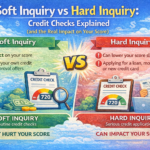
4. Soft vs Hard Inquiry: Side-by-Side Comparison
Here’s a simple table you can use as a visual on your blog:
| Feature | Soft Inquiry | Hard Inquiry |
|---|---|---|
| Triggered by | Checks not tied to a real application (info, pre-approval, reviews) | Real application for credit (card, loan, etc.) |
| Affects credit score? | No | Yes, can cause small temporary drop |
| Visible to lenders? | Usually no (mostly only you see them) | Yes, lenders see these |
| Visible to you? | Yes, on your own report | Yes |
| How long on report? | Often up to 2 years, but harmless | Up to 2 years, typically affects score for about 12 months Equifax+3Experian+3Experian+3 |
| Examples | Checking your own score, pre-approval, employer or existing lender review | Applying for a credit card, auto loan, personal loan, mortgage |
5. How Much Does a Hard Inquiry Really Hurt Your Score?

This is where people get scared for no reason.
myFICO says: myFICO+1
- A single hard inquiry will usually lower your FICO score by less than 5 points, if at all
- The impact fades over about 12 months
- After 12 months, most FICO scores stop counting that inquiry, even though it will still show on your report for up to 2 years
Investopedia and other sources also note that hard inquiries are one of the smallest factors in your score compared with payment history, utilization, etc. Investopedia+1
Multiple hard inquiries in a short period, especially for credit cards, can be a red flag. But a few over time is totally normal.
6. Real-Life Example: Many Soft Checks vs One Hard Check
Let’s imagine Alex, a beginner trying to be careful.
Scenario A – Lots of Soft Inquiries
- Alex checks their own credit score monthly via a free app
- Their bank does a soft pull once in a while to see if they qualify for a better card
- They get pre-approved offers in the mail from two card companies
Result:
- That’s multiple soft inquiries
- Score impact = zero
- Only Alex sees most of these when they pull their own report
Scenario B – One Hard Inquiry
Alex decides to apply for a new cashback credit card:
- The issuer runs a hard inquiry
- Alex is approved
- Their score might drop a few points temporarily, then recover over the next 6–12 months with good behavior
Important: Alex’s score was never hurt by the soft inquiries.
Only the hard inquiry from the actual application had any impact.
7. How Long Do Inquiries Stay on Your Credit Report?
Let’s break this down clearly.
Soft Inquiries
- May appear on your reports (depends on the bureau)
- Are typically only visible to you
- Do not affect your scores
- Can remain for up to 2 years, but they’re basically there for information only Experian+2Experian+2
Hard Inquiries
- Show up on your credit reports with each bureau that was pulled
- Are visible to lenders and other authorized users of your report
- Generally remain on your report for up to 2 years
- For FICO scores, they usually affect your score for about 12 months, then stop counting Experian+2Equifax+2
Some educational sources sum it up like this: inquiries stay for around 2 years, but the score hit is short-term compared to things like late payments, collections, or bankruptcies. Financial Education+1
8. Rate Shopping: Many Inquiries Counted as One (For Certain Loans)
Here’s a pro tip beginners rarely know.
When you’re shopping for a big loan (like a mortgage, auto loan, or student loan), credit scoring models know you’re comparing offers, not trying to open 10 different loans.
According to recent explanations: Investopedia+1
- FICO and VantageScore have “rate shopping windows”
- Multiple hard inquiries for the same type of loan in a short period are treated as one inquiry for scoring purposes
- For many FICO models, this window can be up to 45 days
- VantageScore typically uses a 14-day window
Important details:
- This usually applies to installment loans (mortgages, auto loans, personal loans of the same type and amount)
- It does NOT apply the same way to credit card applications — multiple card applications are each separate hard inquiries
Smart move:
If you’re shopping for a mortgage or auto loan, try to pack your applications into a 2–4 week period so they count as one for scoring purposes.
9. Do Employers and Landlords Do Hard or Soft Checks?
It depends how they pull your report, but generally:
- Employers usually use a version of your credit report that is a soft inquiry and doesn’t affect your credit score, and they must have your written permission. myFICO+2Investopedia+2
- Landlords / property managers can appear as either hard or soft, depending on the service they use — but in many cases, it’s treated more like a tenant screening soft check.
If you’re not sure, you can ask up front:
“Will this be a soft inquiry or a hard inquiry on my credit report?”
10. Myths About Soft & Hard Inquiries (Beginner Edition)
Myth 1: “Checking my own credit score will hurt my score.”
False.
- Checking your own report or score = soft inquiry
- Soft inquiries do not affect your scores Consumer Financial Protection Bureau+2myFICO+2
You should check your own credit regularly — regulators like the CFPB encourage it so you can catch errors and fraud. Consumer Financial Protection Bureau+1
Myth 2: “Any credit check is bad.”
False.
- Soft checks are harmless and often very useful (pre-approval, self-monitoring). Capital One+2Intuit Credit Karma+2
- A few hard inquiries over time are normal.
- It’s excessive, repeated applications in a short period that can worry lenders.
Myth 3: “Hard inquiries ruin your score for years.”
False.
- Hard inquiries usually cause a small, temporary drop
- FICO says they typically impact your score for about 12 months, even though they can appear on your report for up to 2 years Experian+2Equifax+2
- Bigger issues like late payments, collections, and high utilization have much more serious and long-lasting impact
Myth 4: “Soft inquiries don’t show up at all.”
Partly false.
- Soft inquiries often do show up on your reports, but only you see them. Consumer Financial Protection Bureau+2Experian+2
- Lenders generally don’t see your soft inquiries, and they don’t affect your score.
11. How to Protect Your Score When You Need Credit
Here’s how a beginner can be smart about inquiries.
1. Use Pre-Qualification / Pre-Approval When Possible
Many banks and sites let you check your odds of approval with a soft inquiry only.
- Look for language like “Check if you pre-qualify without affecting your credit score”. Capital One+2Compare the Market+2
- If you look likely to be approved, then you can proceed with the full application (which will be a hard inquiry).
2. Avoid Applying for Multiple Credit Cards at Once
- Each card application = a separate hard inquiry
- Too many in a short time looks risky
Better strategy:
- Space out credit card applications
- Only apply for cards you really want/need
3. Time Your “Big” Applications
For major loans:
- Mortgages
- Auto loans
- Student or personal loans
Try to:
- Shop around within 14–45 days so the inquiries are grouped as one for scoring (depending on model). Investopedia
- Keep your credit utilization low and payments on time in the months before applying.
4. Keep Perspective: Inquiries Are a Small Piece of the Puzzle
According to FICO and other sources, hard inquiries are a minor factor in your score compared to:
- Payment history
- Credit utilization
- Length of history
- Serious derogatory marks Investopedia+1
So:
- Don’t be afraid to apply for good opportunities
- Just avoid random, frequent applications and focus on the basics
12. Quick FAQ: Soft vs Hard Inquiry
Q1: Do soft inquiries ever hurt my credit score?
No. Soft inquiries never affect your credit score. They’re informational only. Experian+2Capital One+2
Q2: How many hard inquiries is “too many”?
There’s no magic number, but:
- 1–2 in a year is usually not a big deal
- 6–10 credit card inquiries in a few months can look desperate or risky
Lenders look at both how many and how recent they are.
Q3: Can I remove hard inquiries from my credit report?
You can dispute an inquiry only if it’s incorrect or unauthorized (fraud, identity theft). Legitimate inquiries stay for up to 2 years, but their impact fades. Financial Education+1
Q4: If I’m denied for a card, is the inquiry erased?
No. The hard inquiry stays even if you’re denied. The credit check happened, so it’s recorded.
Q5: Which bureaus see the inquiry?
Only the bureaus the lender actually pulled:
- Some lenders pull one bureau (e.g., only Experian)
- Others may pull two or all three
You might see a hard inquiry on one report but not another.
13. Final Thoughts: Don’t Fear Credit Checks — Just Understand Them
Soft vs hard inquiries is one of those topics that sounds scarier than it is.
If you remember just three things:
- Soft inquiries = no score impact. Check your own credit as often as you like.
- Hard inquiries = small, temporary score impact. Normal when you apply, just don’t spam applications.
- Big picture matters more: On-time payments, low utilization, and avoiding serious derogatory marks are way more important than a couple of hard pulls.