Written by MrHamza, Credit Score Educator for Beginners
What Does “Minimum Payment Meaning” on a Credit Card? If you’ve ever opened a credit card statement and saw a small line reading something like:
“Minimum Payment Due: $32.34”
you might have wondered:
“Is that enough? Or do I need to pay more?”
This article breaks it down: what the minimum payment really means, how it’s calculated, and why paying only that minimum can cost you — sometimes a lot.
1. What Is a Credit Card Minimum Payment?
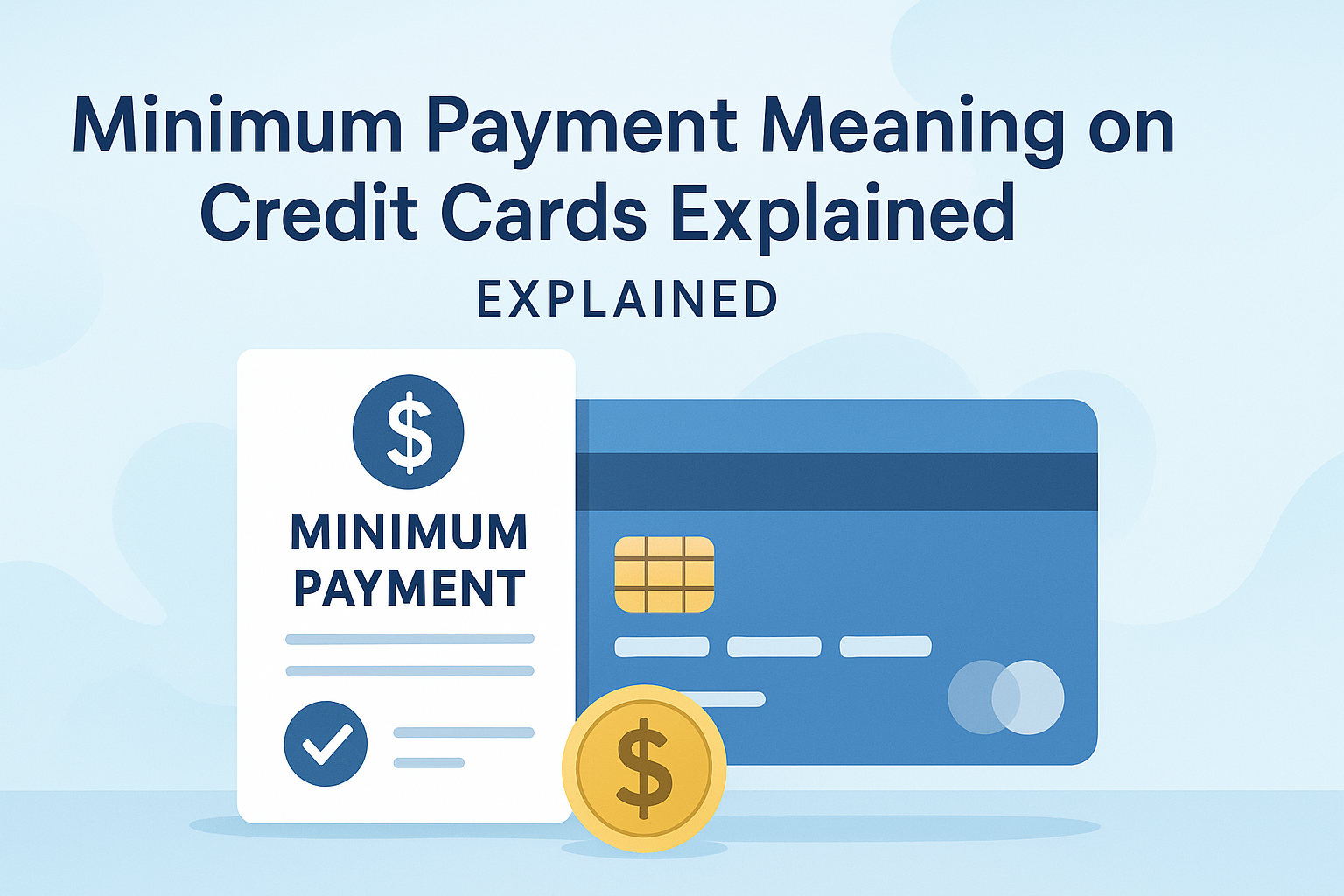
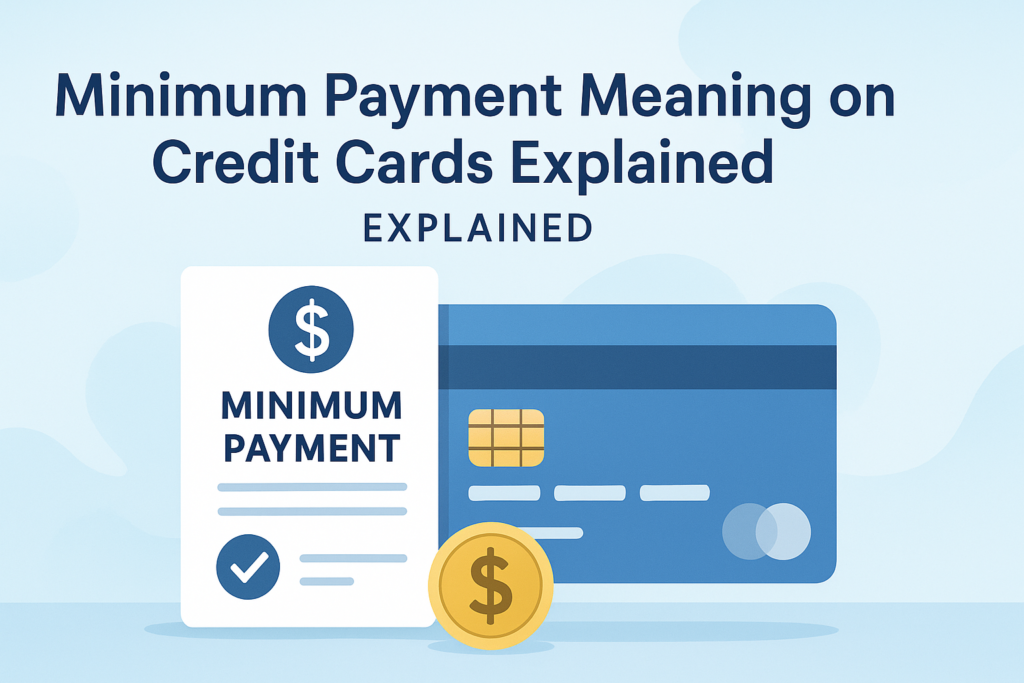
A minimum payment is the smallest amount your card issuer requires you to pay by the due date so that your account stays in good standing. Experian+1
Usually, the minimum payment is calculated based on one of the following (or a mix): Experian+2Citi+2
- A percentage of your current balance (e.g. 1 %–3 %) Sunflower Bank+1
- A fixed minimum amount (for low balances) — e.g. $25, $35, etc. moneysupermarket.com+1
- Plus any interest and fees that have been added for that billing cycle. Experian+1
So minimum payment is always some small portion of what you owe, plus whatever interest and fees have been applied.
What minimum payment does for you:
- Keeps your account “current” so you avoid late fees. Chase+1
- Prevents a late payment report to the credit bureaus (which hurts your credit score). Chase+1
2. What Happens If You Pay Only the Minimum
Paying only the minimum due every month comes with serious trade-offs. Here’s what to expect:
✅ What works: You stay “good standing”
- No late fees (as long as you pay on time). MoneySavingExpert.com+1
- Your account remains open — nothing negative is reported solely for paying minimum. Chase+1
⚠️ What you give up (and what gets worse):
- The remaining balance carries over — then interest kicks in. Experian+2Experian+2
- Because of interest + fees + new purchases, your debt can grow over time instead of shrink. CBS News+2CareCredit+2
- This means you end up paying much more than your original purchases. Upgrade+2Sunflower Bank+2
- Your credit utilization (balance vs limit) may stay high — which hurts your credit score, even if you’re not late. Investopedia+2Experian+2
In short: paying minimum keeps you “safe,” but it also keeps you in debt — often for many years.
3. Real-Life Example: Minimum Payment vs Paying More
Let’s illustrate with real numbers.
Scenario A — Using Minimum Payment Only
- Balance on card: $3,000
- Issuer sets minimum payment at 2 % of balance (or fixed minimum if lower) — so minimum = $60 + interest/fees moneysupermarket.com+2Equifax+2
- Suppose APR (interest rate) is high, e.g. ~20–25 % (typical for many cards when balance carried). CBS News+2Capital One+2
If you just pay minimum each month:
- Much of that $60 goes toward interest and not the $3,000 principal
- It could take decades to fully repay — and you’ll end up paying thousands extra in interest. Upgrade+2Investopedia+2
Scenario B — Paying More / Paying in Full
If instead you pay:
- $300–$500 per month (or the full balance when possible)
Then:
- You cut down the principal quickly
- Interest charges shrink each month, because the balance is lower
- You may avoid interest altogether — many cards won’t charge interest if you pay full statement balance by due date. Capital One+1
- Over time, you save big on interest and clear debt sooner
Bottom line: Minimum payment = debt stays; paying more (or full) = debt goes away faster.
4. Why Do Credit Card Issuers Offer Minimum Payments at All?
It might seem weird — why give an option that encourages long-term debt?
Because from their side:
- Minimum payments ensure they get some cashflow each month, even if borrowers can’t pay in full. College Ave+1
- Carrying balances means interest — and that interest is a big part of how they make money. MoneySavingExpert.com+2Capital One+2
So the “minimum payment” is a safety net for them — not a recommended strategy for borrowers.
From your side, it can feel like “I’m doing the right thing” — but it treads you into long-term debt slowly.
5. Impact on Credit Score: Minimum Payment vs Balance / Utilization
Here’s the truth about minimum payments and credit scoring:
- Making the minimum payment on time doesn’t hurt your credit score. It keeps your account current and avoids late-payment marks. Chase+2Citi+2
- BUT — because you carry over a balance, your credit utilization stays high. High utilization is a key factor that can hurt your score. Experian+2Investopedia+2
- That means even if you’re always paying at least the minimum, you might still have a sub-optimal credit score because of large balances
So minimum payment = “safe payment behavior + probably slow or stagnant credit-building.”
6. When Might Paying Only the Minimum Make Sense (Short-Term)?
There are a few scenarios where minimum payment might be the “least bad” option temporarily.
- You’re tight on cash this month → minimum payment avoids late fees and credit damage.
- You plan to pay more next pay-check or soon after — treat minimum as a placeholder to keep account current.
- You have a 0% promotional balance transfer offer — then carrying a balance doesn’t accrue interest (but always check when the promo ends). lloydsbank.com+1
If you choose minimum, treat it as a “temporary support—not a habit.”
7. Smart Rules for Beginners: Use Your Minimum Payment Wisely
Here’s a simple “minimum payment + good credit habits” plan:
- Always pay at least the minimum on time — set up autopay or reminders so you never miss.
- Whenever you can, pay more — ideally the full balance. Even doubling the minimum makes a big difference long-term.
- Track your balance vs limit — high balance means high utilization, which can hurt your credit score.
- Avoid letting balances sit for months or years — interest builds up fast, and debt becomes harder to escape.
- Use credit cards only for what you can repay reasonably within a month or two, especially if you don’t plan to carry a balance long-term.
8. Quick FAQ: Minimum Payment Basics
Q: If I pay only the minimum, does that hurt my credit score right away?
A: No — as long as the payment is on time, your score won’t be negatively impacted just for paying the minimum. Chase+2InCharge Debt Solutions+2
Q: Does paying more than the minimum help me avoid interest?
A: Only if you pay the full statement balance before or by the due date. Otherwise, interest applies to the unpaid portion. Capital One+2Experian+2
Q: Can minimum payments make me debt-free eventually?
A: Yes — technically, if you never spend more, make the minimum payment every month, and interest doesn’t change, you’ll gradually pay down the balance. But it can take many years, and you’ll pay a lot more in interest than if you paid more. Upgrade+2CareCredit+2
Q: When is it okay to rely on minimum payment temporarily?
A: Only when you truly can’t pay more — but make a plan to pay more soon after. Minimum payment should be a short-term fallback, not a long-term strategy.
9. Final Thoughts: Minimum Payment Is a Safety Net — Not a Strategy
The “minimum payment” on your credit card is a useful feature when money is tight. It keeps your account active and avoids late fees.
But using it every month as your go-to repayment method locks you into longer debt, higher interest, and slower credit progress.
If you want good credit and financial health, think of the minimum payment as just that — a minimum, not a goal. Pay more when you can, and ideally pay your balance off in full each month.
That’s the real key to using credit cards responsibly and building a healthy financial future.
Mrhamza:
Money basics writer • Credit scores, reports, and everyday finance explainers
Research-focused writing built from primary consumer/regulator sources and updated when guidance changes.
About the author
Editorial policy
Corrections •
Disclosure: General education, not legal advice.