Written by MrHamza, Credit & Money Basics Educator
The question today is How to Compare Credit Cards? If you’ve ever tried to compare credit cards, you’ve probably seen this:
- “0% intro APR!”
- “Earn up to 5x points!”
- “No annual fee*” (*with 3 lines of fine print)
And then you close the tab because your brain quietly melts.
Good news: you don’t need to become a finance pro to compare cards like one.
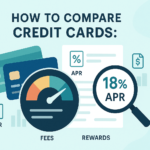
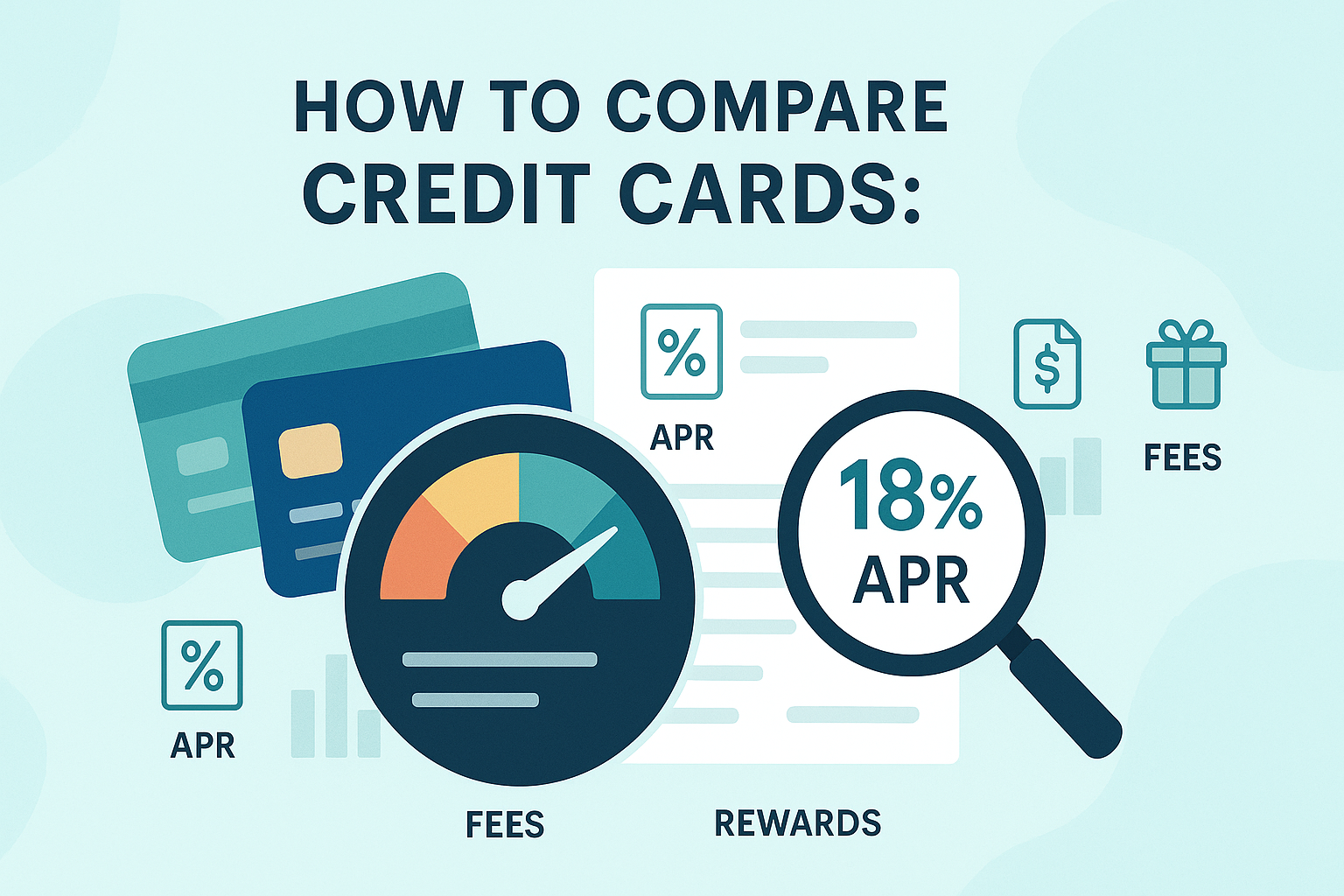
In this guide, I’ll walk you through a simple system to compare:
- APR (interest rate)
- Fees (the sneaky money leaks)
- Rewards (cash back, points, miles)
- Plus a few extra features that actually matter
With real number examples, so you can see how different cards can cost or save you hundreds of dollars.
1. The 5-Second Snapshot: What Matters Most
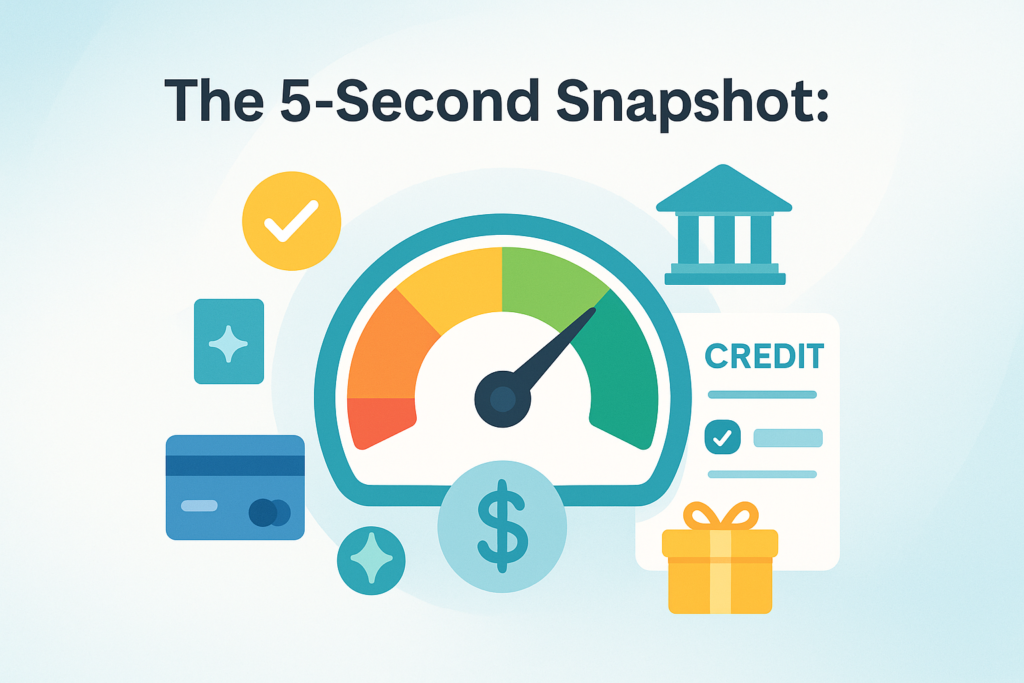
When you look at any credit card offer, your brain should automatically scan for:
- APR
- Purchase APR
- Balance transfer APR
- Cash advance APR
- Penalty APR (if you mess up)
- Fees
- Annual fee
- Foreign transaction fee
- Balance transfer / cash advance fees
- Late fees and “junk fees”
- Rewards
- Cash back % or points per dollar
- Bonus categories (gas, groceries, travel, etc.)
- Sign-up bonus rules
- Intro Offers
- 0% intro APR on purchases or balance transfers
- How long the intro period lasts
- What happens after it ends
- Extra Features
- Travel protections, purchase protections, credit score tools, etc.
Everything else is noise for most beginners.
2. Understanding APR: The Cost of Borrowing
2.1 What Is APR in Plain English?
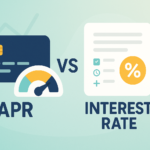
APR (Annual Percentage Rate) is the yearly cost of borrowing on your card, expressed as a percentage. By law (Truth in Lending Act), lenders have to show you the cost of credit as an APR so you can compare offers more easily.
Credit card APRs are high right now. Federal Reserve and industry data show average credit card interest rates around 22–23% on accounts that carry a balance — historically very high compared to most other types of loans.
That’s why choosing a card based on APR really matters if you think you’ll ever carry a balance.
2.2 Types of APR You’ll See
In the “summary box” (Schumer box) for a card, you’ll usually see separate APRs listed for:
- Purchases APR – applies to normal spending
- Balance transfer APR – for moving debt from another card
- Cash advance APR – for taking cash from your card (usually very expensive)
- Penalty APR – an even higher rate if you pay late or break certain terms
Many cards also have variable APRs, which move up and down with an index rate (like the prime rate).
2.3 Real-Life Example: Why APR Matters So Much
Imagine two cards:
- Card A: 18% APR
- Card B: 28% APR
You carry a $2,000 balance all year and don’t pay it off fully (very common).
Rough interest cost estimate over one year:
- At 18%:
- Interest ≈ $2,000 × 0.18 = $360
- At 28%:
- Interest ≈ $2,000 × 0.28 = $560
Difference: about $200 extra in interest in just one year
Same balance. Same spending. Just a worse APR.
If you regularly carry a balance, APR matters more than rewards.
A “good” rewards card with a bad APR can quietly eat your money.
3. Understanding Fees: The Silent Budget Killers
APR is only half the story. Fees are the silent killers that show up in tiny fonts.
The Consumer Financial Protection Bureau (CFPB) has pointed out that complex pricing and junk fees can make people pay far more than they expect.
Here are the main ones to watch:
3.1 Annual Fee
This is the fee you pay just to keep the card open, usually once per year.
- Many beginner cards have $0 annual fee
- Travel or premium cards often cost $95–$550+ per year
The key question:
“Are the rewards and perks I actually use worth more than the annual fee?”
Example: Is the $95 Annual Fee Worth It?
You’re choosing between:
- Card 1 (No Fee)
- 1.5% cash back on everything
- Annual fee: $0
- Card 2 (Paid Fee)
- 2% cash back on everything
- Annual fee: $95
Let’s say you spend $10,000 per year on the card.
- Card 1 rewards:
- 1.5% of $10,000 = $150 cash back
- Card 2 rewards:
- 2% of $10,000 = $200 cash back
- Minus $95 fee → $105 net
So at $10,000 spend:
- Card 1: +$150
- Card 2: +$105
Card 1 is actually better, even though the rewards rate is lower.
The break-even point is around $19,000 per year of spending:
- 1.5% of $19,000 = $285
- 2% of $19,000 = $380 – $95 = $285
Only above $19k/year in spending does Card 2 pull ahead.
For beginners, no-fee cards are often the smarter starting point.
3.2 Foreign Transaction Fee
If you ever:
- Travel outside the US
- Shop from international websites
Check the foreign transaction fee — often around 3% per transaction on many basic cards. That’s $30 in fees on $1,000 of travel spend.
Many travel-focused cards have 0% foreign transaction fees, which can save you a lot if you travel regularly.
3.3 Balance Transfer & Cash Advance Fees
- Balance transfer fees are usually around 3–5% of the amount transferred.
- Cash advance fees can be something like 5% or $10, whichever is greater, plus a higher APR with no grace period.
These make sense only in specific cases and can get expensive fast.
3.4 Late Fees (And Why They’re Changing)
Late fees have historically been around $30+ per missed payment, but a new CFPB rule is moving typical late fees for large issuers down to about $8, aiming to save families billions.
Still: late payments can also trigger penalty APRs or negative marks on your credit report, so the goal is to never be late.
4. Understanding Rewards: Fun… If You Don’t Overpay for Them
Rewards are the shiny part of the offer: cash back, points, miles, sign-up bonuses.
They can be great — if:
- You pay on time
- You don’t carry a big balance at a high APR
- You actually use the rewards
The CFPB has warned that complicated pricing and rewards structures can confuse people and lead them to pay more overall.
4.1 Main Types of Rewards
- Flat-rate cash back
- Example: 1.5% back on everything
- Simple and great for beginners
- Tiered cash back
- Example: 3% on groceries, 2% on gas, 1% on everything else
- Points / Miles
- More common on travel cards
- Value per point can change based on how you redeem
- Sign-up bonuses
- Example: “$200 bonus if you spend $1,000 in 3 months”
- Great if your normal budget can handle that spend without debt
4.2 Example: Which Rewards Card Wins?
You’re choosing between:
- Card A (Flat Cash Back)
- 1.5% on everything
- No annual fee
- Card B (Tiered Rewards)
- 3% on groceries
- 2% on gas and dining
- 1% on everything else
- No annual fee
Your yearly spending:
- Groceries: $4,000
- Gas & dining: $3,000
- Everything else: $3,000
- Total: $10,000
Card A rewards:
- 1.5% of $10,000 = $150
Card B rewards:
- 3% of $4,000 = $120
- 2% of $3,000 = $60
- 1% of $3,000 = $30
- Total = $210
Card B wins by $60 per year.
If your spending matches the bonus categories, tiered rewards can be worth it.
But if you don’t want to track categories at all, flat 1.5–2% cards are easier.
5. The Schumer Box: Your Secret Weapon for Comparing Cards
Every credit card offer has a little table that summarizes the key costs — this is called the Schumer box. It’s required under the Truth in Lending Act as a way to clearly show APRs and major fees.
When you’re comparing two cards, ignore the marketing and go straight to the Schumer box.
What to look for:
- Top rows:
- Purchase APR (and whether it’s variable)
- Balance transfer APR
- Cash advance APR
- Penalty APR (and when it applies)
- Fee section:
- Annual fee
- Balance transfer fee
- Cash advance fee
- Foreign transaction fee
- Late payment fee
If you just compare those rows across cards, you’re 80% of the way to a smart decision.
6. Simple 3-Card Comparison Walkthrough

Let’s compare three fictional cards side by side.
Card Details
Card Simple
- APR: 25%
- Annual fee: $0
- Rewards: 1.5% cash back on everything
- Foreign fee: 3%
Card Travel Plus
- APR: 20%
- Annual fee: $95
- Rewards: 3x points on travel & dining, 1x on everything else
- Foreign fee: 0%
- Perks: Trip delay insurance, no foreign transaction fees
Card Balance Helper
- Intro APR: 0% on balance transfers for 15 months
- Balance transfer fee: 3%
- Regular APR after intro: 28%
- Annual fee: $0
- Rewards: 1% cash back on everything
Now let’s see which makes sense in three different real situations.
Scenario 1: You Usually Carry a Balance
You tend to have $1,500–$2,000 left on your card after each month, and you know you won’t pay it to zero right away.
Who wins?
- Card Simple vs Travel Plus
- Travel Plus has lower APR, but you pay $95 every year
- If you carry a balance, interest will likely cost you more than rewards will save
- Card Balance Helper
- 0% intro APR is great if you move an existing balance and aggressively pay it down during the intro period
- After the intro, 28% APR is brutal if you keep carrying a balance
For most “I carry a balance” beginners, a low-APR, low-fee card is usually better than any rewards card. Even a difference of a few APR points can beat the value of rewards.
Scenario 2: You Always Pay in Full
You use your card for normal spending but pay it off every month.
Now APR matters less and rewards matter more.
- Card Simple:
- 1.5% back, $0 annual fee → simple, low maintenance
- Card Travel Plus:
- Could be better only if you spend enough on travel & dining to beat the $95 fee
Example:
- Travel & dining: $5,000/year
- Everything else: $5,000/year
Card Simple:
- 1.5% of $10,000 = $150
Card Travel Plus:
- 3x on $5,000 (let’s pretend 1 point ≈ 1 cent) → ≈ $150
- 1x on $5,000 → ≈ $50
- Total ≈ $200 value
- Minus $95 fee → $105 net
In that case, Card Simple is still better.
You’d need much higher travel/dining spending to make the $95 fee “worth it”.
Scenario 3: You Have Existing Debt on a Card
You already owe $3,000 on another credit card at 26% APR, and you’ve been struggling to pay it off.
Here, Card Balance Helper might be useful:
- You transfer the $3,000 at a 3% fee → $90 fee
- Now you owe $3,090 at 0% APR for 15 months
If you divide $3,090 by 15 months:
- You’d need to pay about $206 per month to clear it before the intro ends
If you can realistically do that, you could save a lot in interest compared to staying at 26% APR.
If you can’t, you risk ending up with a big balance at 28% APR later, which is even worse.
Balance transfer cards are powerful tools, not magic.
They work only if you stop using the old card, stop adding new debt, and aggressively pay down the balance.
7. Tools That Help You Compare Cards (Without Getting Lost)
You don’t have to do all the work by hand.
- The CFPB has published guides like “How to find the best credit card for you” that walk you through comparing APRs, fees, and rewards.
- The CFPB also launched an Explore Credit Cards comparison tool that lets you compare more than 500 cards from 150 companies based on APRs, fees, and rewards, without steering you to a specific issuer.
You can use those kinds of tools to narrow down options, then:
- Open the Schumer box for your top 2–3 cards
- Compare APRs, fees, and key rewards
- Pick the one that fits how you actually spend and pay
8. A Simple Decision Framework for Beginners
Ask yourself these questions:
- Do I ever carry a balance?
- Yes → Focus on low APR + low fees. Rewards are secondary.
- No, I always pay in full → Focus on rewards + annual fee math.
- Am I okay tracking categories?
- No → Choose a simple flat-rate cash back card (1.5–2%)
- Yes → Consider tiered rewards that match your real spending (groceries, gas, etc.)
- Do I travel or buy from foreign sites?
- Yes → Look for 0% foreign transaction fees
- No → This matters less
- Do I already have credit card debt?
- Yes → Consider a 0% balance transfer card, but only with a strict payoff plan
- What’s my goal for this card?
- Build credit? Keep it simple, no fee, pay on time
- Max rewards? Choose categories that match your real lifestyle
- Get out of debt? Use intro offers wisely and stop adding new debt
9. Quick Beginner Checklist (Print or Save This)
Before applying for any card, check:
- Purchase APR and whether it’s variable
- Balance transfer APR and fee (if you’ll use it)
- Cash advance APR and fee (and avoid using it if possible)
- Penalty APR and what triggers it
- Annual fee (if any) and whether your actual use justifies it
- Foreign transaction fee (if you travel or shop internationally)
- Rewards structure (simple vs category-based)
- Sign-up bonus rules and minimum spend
- Any 0% intro offers and when they end
- Your own plan: Will you pay in full or carry a balance?
If a card looks “too good to be true”, read the Schumer box slowly. Most of the traps live there.